
Pricing a menu? Here are some simple tricks
Pricing a restaurant menu is one of the most important decisions a business owner makes. Set your prices too high, and customers may choose a competitor. Set them too low, and you could be serving hundreds of meals without generating enough profit to keep your business running.
Learning how to price a menu involves more than adding a markup to the cost of ingredients. Restaurant owners must consider food costs, labor, overhead, customer expectations, competition, and the profit needed to sustain their business.
Whether you're opening a neighborhood deli, running a pizzeria, managing a café, or operating a full-service restaurant, understanding menu pricing can make a significant difference to your bottom line.
In this guide, we'll explain how to calculate food costs, price individual menu items, establish profitable margins, and adjust your restaurant menu prices as expenses change.
1. Understand the Basics of Restaurant Menu Pricing
Before calculating menu prices, it's important to understand what you're actually trying to accomplish.
Every menu item needs to generate enough revenue to cover its ingredients and contribute toward other business expenses, including:
Employee wages and payroll taxes
Rent and utilities
Insurance and licensing
Packaging and disposable supplies
Credit card processing fees
Equipment maintenance
Marketing and advertising
Business profits
A common mistake among new restaurant owners is assuming that a dish is profitable simply because its selling price is higher than its ingredient cost.
For example, imagine a restaurant sells a chicken sandwich for $10. The ingredients cost $3. At first glance, the restaurant appears to make $7 per sandwich.
However, that $7 must also contribute toward employee wages, rent, electricity, packaging, and other operating expenses. The difference between selling price and ingredient cost is not the same as net profit.
Successful restaurant menu pricing starts with understanding these expenses and building a pricing structure that supports the entire business.
2. How to Calculate Food Cost Per Plate
One of the first steps in learning how to price a restaurant menu is calculating the food cost of every dish. Food cost refers to the cost of the ingredients used to prepare a menu item.
Step 1: List every ingredient
Suppose your restaurant sells a cheeseburger. Here is an example ingredient breakdown:
IngredientCostBeef patty$1.65Burger bun$0.45Cheese$0.30Lettuce and tomato$0.35Sauce and condiments$0.20Total ingredient cost$2.95
The total food cost for this cheeseburger is $2.95.
Remember to account for cooking oil, seasonings, sauces, garnishes, and other ingredients that are easy to overlook. Small costs become significant when a restaurant sells hundreds of portions every day.
Step 2: Determine your target food cost percentage
Food cost percentage measures how much of a menu item's selling price is spent on ingredients. The formula is:
Food Cost Percentage = (Ingredient Cost ÷ Menu Price) × 100
For example:
Ingredient cost: $2.95
Selling price: $10
Food cost percentage: 29.5%
This means 29.5% of the selling price goes toward ingredients. The remaining 70.5% is available to cover labor, overhead, other expenses, and profit.
Step 3: Calculate a selling price
If you know your ingredient cost and target food cost percentage, you can calculate a starting menu price.
Menu Price = Ingredient Cost ÷ Target Food Cost Percentage
For example: $2.95 ÷ 0.30 = $9.83
If your target food cost percentage is 30%, the calculated selling price is approximately $9.83. You might choose to sell the burger for $9.99 or $10.49 after considering customer expectations, operating expenses, and competing restaurants.
This method provides a starting point rather than a guaranteed profitable price.
3. What Is a Good Food Cost Percentage for a Restaurant?
Restaurant food cost percentages vary depending on the type of establishment, menu, and business model. The following ranges are illustrative planning benchmarks, not universal industry standards.
Restaurant typeExample target rangeFast-food restaurant25%–35%Deli or sandwich shop28%–35%Pizzeria25%–35%Casual dining restaurant28%–35%Fine dining restaurant28%–38%Coffee shop20%–35%
Actual targets should reflect the business's labor requirements, overhead, sales volume, and product mix.
A restaurant with expensive ingredients may operate successfully with a higher food cost percentage if it generates enough contribution toward other expenses. Likewise, a restaurant with inexpensive ingredients may still struggle if labor and rent are unusually high.
The goal isn't necessarily to achieve the lowest food cost percentage. The goal is to build a sustainable pricing model that produces sufficient profit after all expenses.
4. How to Price a Menu Item Using a Simple Formula
Let's look at how to price a menu item using a practical example. Imagine you own a neighborhood deli and want to introduce a grilled chicken sandwich.
Your ingredient costs are:
Chicken breast: $2.10
Bread: $0.60
Lettuce and tomato: $0.45
Cheese: $0.35
Sauce: $0.25
Total ingredient cost: $3.75. You want to target a 30% food cost percentage. Using the formula:
$3.75 ÷ 0.30 = $12.50
Your calculated menu price is $12.50.
However, suppose nearby delis sell comparable sandwiches for $10.99 to $13.99. A $12.50 price may fit comfortably within local customer expectations. You might choose $12.99 after reviewing your expenses and competitors. At $12.99, your food cost percentage would be approximately 28.9%.
What if customers won't pay the calculated price?
Sometimes the price required by your target food cost percentage is higher than customers are willing to pay. In that situation, consider:
Negotiating better ingredient prices with suppliers
Reducing food waste
Adjusting portion sizes without compromising customer satisfaction
Offering a different ingredient combination
Positioning the item as a premium product
Replacing an unprofitable item with a more attractive alternative
Avoid automatically lowering prices without understanding the financial impact. A popular menu item can still hurt your business if it consistently generates insufficient contribution toward operating costs.
5. How to Figure Out Food Cost in a Restaurant
Calculating individual recipe costs is useful, but restaurant owners should also monitor their overall food cost percentage. This helps identify inventory problems, waste, pricing issues, and changes in purchasing costs.
The basic formula is:
Food Cost = Beginning Inventory + Purchases − Ending Inventory
Suppose your restaurant starts the month with $8,000 in food inventory. During the month, you purchase $12,000 in additional ingredients. At the end of the month, you have $5,000 remaining in inventory.
Your food cost is: $8,000 + $12,000 − $5,000 = $15,000
If the restaurant generated $50,000 in food sales, its overall food cost percentage would be: ($15,000 ÷ $50,000) × 100 = 30%
This simplified calculation assumes inventory figures and purchases are accurate and appropriately adjusted for transfers and other accounting items.
Why calculate actual food costs?
Recipe calculations tell you what ingredients should cost. Inventory calculations help reveal what ingredients actually cost your business. The difference may come from:
Food spoilage
Overportioning
Employee mistakes
Theft or unrecorded consumption
Supplier price increases
Inaccurate inventory counts
Excessive preparation waste
Tracking these numbers regularly can help identify problems before they significantly affect profitability.
6. Include Labor Costs When Pricing Your Menu
Food costs are only one part of restaurant pricing. Labor can represent a substantial portion of operating expenses, especially in businesses that require extensive preparation or table service.
Consider two menu items. A grilled cheese sandwich costs $1.50 in ingredients and requires only a few minutes to prepare. A specialty entrée costs $4 in ingredients but requires significantly more preparation and cooking time. Even if both dishes have attractive food cost percentages, their actual profitability may differ.
Example: Labor cost per item
Suppose an employee earns $20 per hour. A dish requiring 12 minutes of direct labor has an estimated direct labor cost of:
$20 × (12 ÷ 60) = $4
If the dish costs $5 in ingredients, its combined direct ingredient and labor cost is $9. That doesn't include rent, utilities, employer payroll costs, or other expenses.
In practice, employees often prepare multiple orders simultaneously, so labor allocation is more complex than simply multiplying preparation time by hourly wages. Still, this exercise helps illustrate why menu pricing cannot rely exclusively on ingredient costs.
Monitor your prime cost
Restaurants often track a metric called prime cost.
Prime Cost = Cost of Goods Sold + Total Labor Cost
Prime cost combines two of the largest controllable expense categories in restaurant operations. Monitoring it alongside revenue can provide a clearer picture of operational efficiency.
7. Research Your Competitors Before Setting Menu Prices
Knowing your costs is essential, but restaurant pricing also depends on the local market. Customers compare your prices with other restaurants offering similar food, convenience, portions, and experiences.
Before finalizing your menu, research at least three to five comparable competitors. Compare:
Menu prices
Portion sizes
Ingredient quality
Meal combinations
Location and convenience
Customer reviews
Service speed
Overall dining experience
For example, suppose nearby delis sell chicken-over-rice platters for $10.99, $11.99, and $12.99. If your calculated selling price is $11.50, you have room to position your product competitively. However, if your costs require charging $16.99, you may need to rethink your ingredients, portions, or product positioning.
Don't compete on price alone
Being the cheapest restaurant doesn't automatically make you the most successful. Customers may pay more for fresh ingredients, larger portions, faster service, convenient ordering, or a better experience.
Your restaurant should communicate why its prices are justified.
8. How to Price a Restaurant Menu for Different Types of Food
Different menu categories may require different pricing strategies. Applying the same markup to every item can create problems because ingredient costs, preparation time, customer demand, and perceived value vary.
Burgers and sandwiches
Burgers and sandwiches are often suitable for recipe-based food cost calculations because ingredients and portion sizes can be standardized. Calculate the costs of bread, protein, cheese, vegetables, sauces, and any included sides. Then evaluate the selling price against nearby competitors.
Pizza
Pizza pricing requires careful attention to dough, cheese, toppings, packaging, and portion sizes. Cheese and specialty toppings can significantly change the cost of a pizza. Calculate each size separately rather than assuming a large pizza should simply cost twice as much as a small one. Our guide to digital signage for pizza shops shows how to present sizes and toppings clearly.
Breakfast items
Breakfast menus often include relatively inexpensive ingredients such as eggs, toast, and potatoes. However, labor, cooking equipment, and service volume still affect profitability. Combination meals can help increase average transaction value, but their margins must be calculated.
Salads
Salads can appear inexpensive to prepare, but premium proteins, specialty dressings, and fresh produce can increase costs. Spoilage is another important consideration because many vegetables have limited shelf lives.
Beverages
Beverages may provide attractive contribution margins, but don't overlook cups, lids, straws, syrups, ice, and equipment expenses. Track specialty beverages separately because their ingredients and preparation requirements may differ substantially.
9. How to Price a Catering Menu
Catering requires a different approach from standard restaurant menu pricing. Large orders may provide economies of scale, but they also introduce additional costs. These can include:
Special preparation labor
Delivery transportation
Disposable trays and utensils
Setup and cleanup
Equipment rental
Event staffing
Packaging
Food waste allowances
Suppose a restaurant receives a catering order for 50 people. Estimated costs:
ExpenseAmountIngredients$250Labor$150Packaging$50Delivery$50Total estimated direct costs$500
If the restaurant charges $750, the order generates $250 in contribution before allocated overhead, taxes, and other expenses. That doesn't automatically mean the business earns $250 in net profit.
Catering prices should reflect the service provided and the operational demands of fulfilling large orders. Some businesses price catering per person, while others offer fixed packages. Whichever method you choose, calculate the costs before advertising the final price.
10. Use Menu Engineering to Improve Profitability
Menu engineering is the process of evaluating menu items based on their popularity and profitability. Instead of treating every dish equally, restaurant owners can identify which products deserve more attention.
A common menu engineering framework separates items into four categories.
CategoryPopularityContribution marginStarsHighHighPlowhorsesHighLowPuzzlesLowHighDogsLowLow
Stars
Stars are popular items that generate strong contribution margins. These products deserve prominent menu placement and consistent quality.
Plowhorses
Plowhorses sell frequently but produce lower contribution margins. Consider reviewing portion sizes, supplier costs, or pricing. Even small improvements can matter when these items sell in large quantities.
Puzzles
Puzzles generate attractive contribution margins but don't sell frequently. Better descriptions, menu placement, staff recommendations, or promotional campaigns may improve their performance. Our menu board design tips cover how placement and layout draw attention to specific items.
Dogs
Dogs have relatively low popularity and contribution margins. Consider whether they should be redesigned, repriced, promoted differently, or removed. However, an item may still serve a strategic purpose, such as satisfying a specific customer group or completing a menu category.
Measure contribution margin
For menu engineering, contribution margin per item is generally calculated as:
Contribution Margin = Selling Price − Direct Variable Food Cost
Some operators include additional directly variable costs for more detailed analysis. A dish with a higher food cost percentage may still generate more contribution dollars than a cheaper dish. For example:
Item A sells for $10 and costs $3 in ingredients: $7 contribution.
Item B sells for $20 and costs $8 in ingredients: $12 contribution.
Item B has a higher food cost percentage, but contributes more dollars per sale. This is why restaurant owners should evaluate both percentages and actual contribution.
11. Psychological Pricing: Should You Use $9.99 or $10?
Menu pricing also involves how customers perceive prices. Many restaurants use prices ending in .99, such as $9.99 or $12.99. Others prefer rounded prices, such as $10 or $13. Neither approach works best for every restaurant.
Charm pricing
Prices such as $9.99 may appear slightly more affordable than rounded prices. This strategy is common in quick-service restaurants and retail environments.
Rounded pricing
Rounded prices may support a simpler or more premium presentation. A restaurant with an upscale atmosphere might prefer $18 instead of $17.99.
Price anchoring
Restaurants sometimes place a premium-priced item near moderately priced options. The premium item can influence how customers perceive the value of surrounding dishes. However, pricing presentation should remain transparent and avoid misleading comparisons.
Focus on value
Ultimately, customers consider more than the number printed on the menu. Portion size, taste, service, atmosphere, and consistency all influence whether a meal feels worth its price.
12. How Often Should Restaurants Update Menu Prices?
Restaurant prices shouldn't remain unchanged indefinitely. Ingredient costs, wages, rent, and supplier contracts can change throughout the year. Reviewing prices regularly helps protect margins.
A practical starting point is to review major ingredient costs monthly and conduct a more comprehensive menu profitability review quarterly. Businesses experiencing rapid supplier price changes may need more frequent reviews.
Signs it's time to review prices
Ingredient costs have increased.
Labor expenses have risen.
Your food cost percentage is consistently above target.
Competitors have adjusted their pricing.
Certain items generate little contribution.
Portion sizes or recipes have changed.
Your restaurant is struggling to cover operating expenses.
Avoid increasing every menu item by the same percentage without examining individual costs and customer demand. Some items may need larger adjustments, while others may remain profitable at existing prices.
Example: Ingredient cost increase
Suppose a chicken sandwich originally costs $3.50 in ingredients and sells for $11.99. Its food cost percentage is approximately 29.2%. If ingredient costs rise to $4.20, the food cost percentage increases to approximately 35%.
To restore a 30% target food cost percentage, the calculated price becomes:
$4.20 ÷ 0.30 = $14
Whether customers will accept $14 is a separate question. The restaurant might also consider supplier negotiations, recipe changes, or operational improvements.
13. Why Digital Menu Boards Make Price Updates Easier
Once you've learned how to price a menu, the next challenge is keeping those prices accurate and consistent. Traditional printed menus can become expensive and inconvenient when restaurants frequently change prices.
A restaurant may need to update:
Wall-mounted menus
Countertop menus
Promotional signs
Breakfast specials
Seasonal offerings
Multiple restaurant locations
Reprinting materials every time prices change can consume time and money. Digital menu boards offer an alternative.
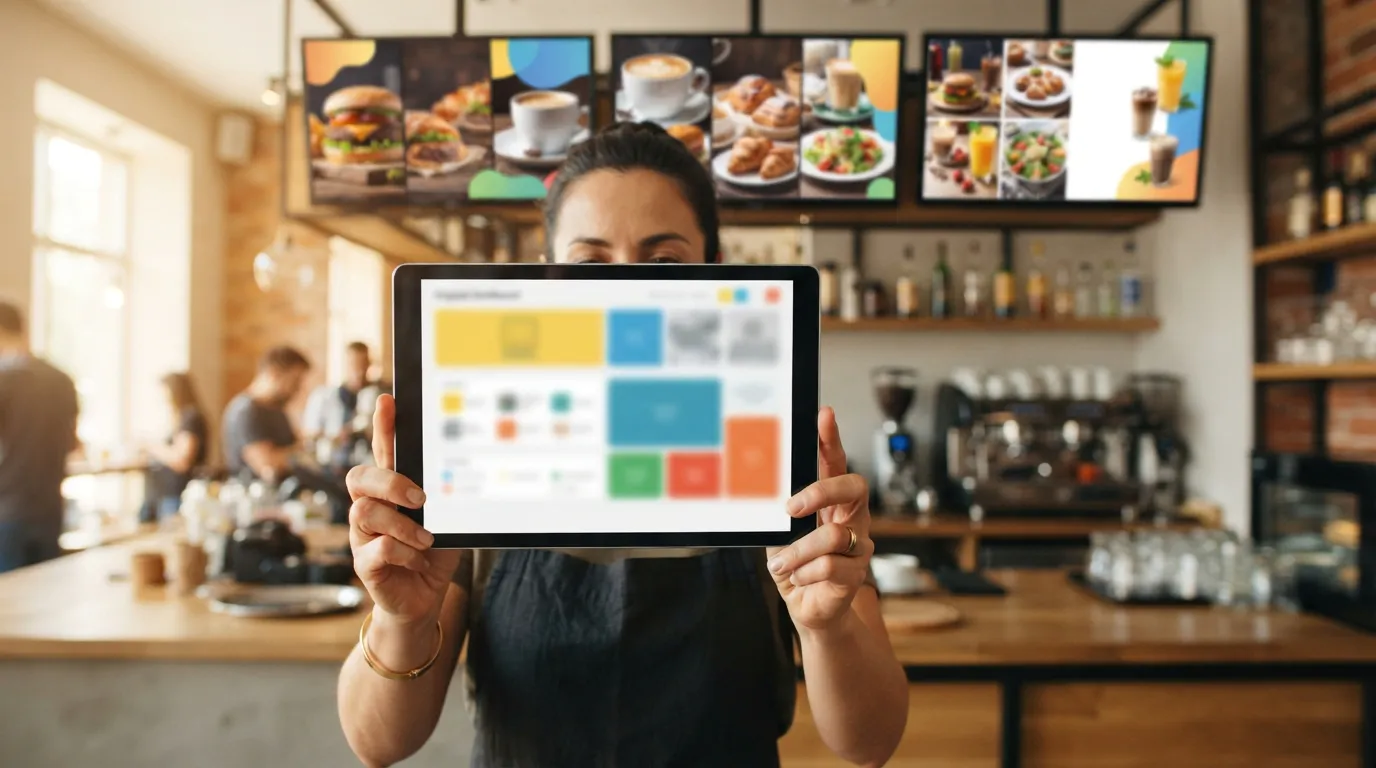
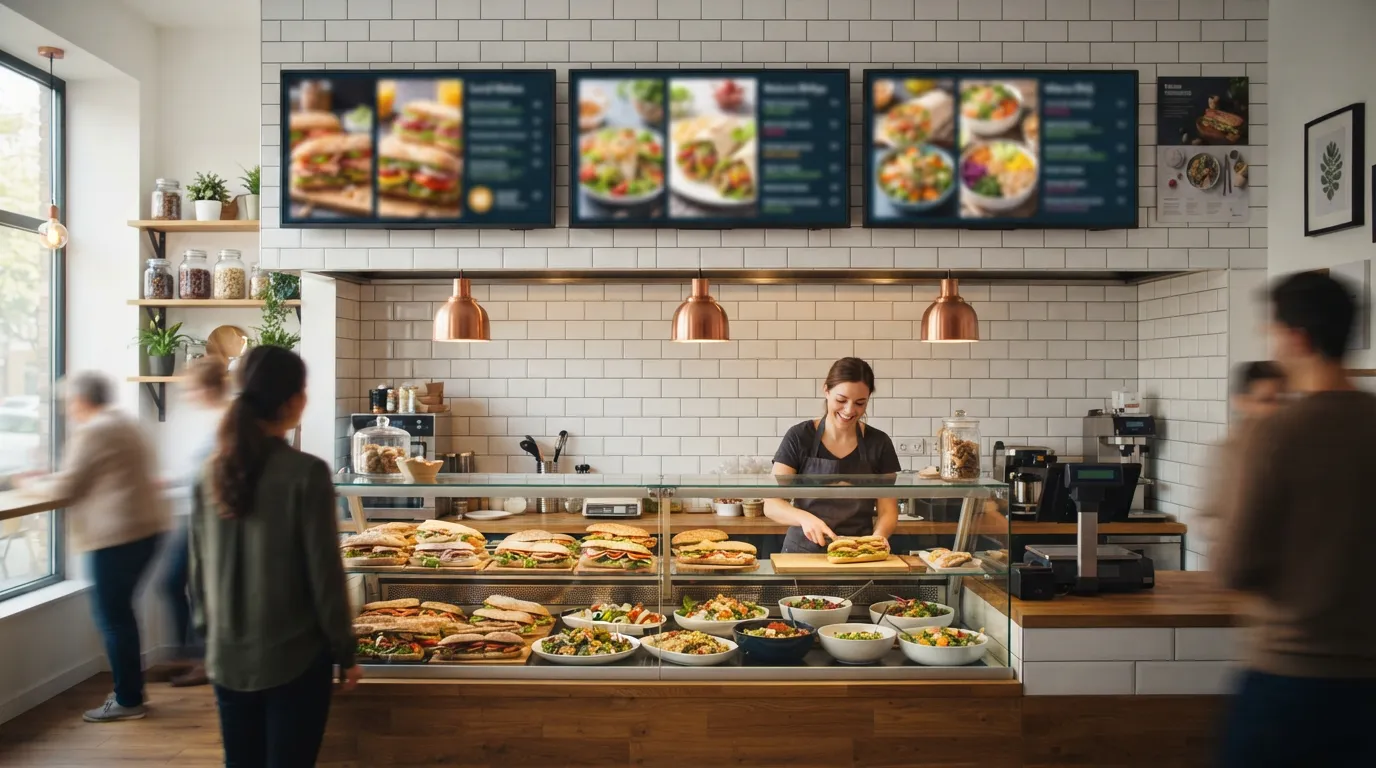
With digital signage for restaurants, businesses can display menus, promotions, images, and pricing on television screens. Instead of printing an entirely new menu, restaurant owners can update their digital menu artwork and publish the revised content to their screens.
Example: A deli with five menu screens
Imagine a deli using five televisions to display:
Breakfast sandwiches
Burgers and hot sandwiches
Gyros and rice platters
Salads and fresh juices
Daily specials
If ingredient costs change, the owner can revise the relevant menu design and update the appropriate screens. This makes it easier to maintain consistent menu displays and introduce seasonal promotions. See how to promote daily specials with digital screens for more ideas.
Affordable digital signage with Billiie
Billiie provides digital signage software designed for businesses that want to manage content on existing compatible TVs. Businesses can upload menu designs, schedule content, and manage multiple screens remotely.
With Billiie, your first screen is free, forever, and after that you can get 10 screens for $10 a month. For restaurants comparing display software costs, see Billiie's digital signage pricing.
Digital signage doesn't replace accurate food cost calculations, but it can simplify how businesses present and update their prices.
14. Common Restaurant Menu Pricing Mistakes
Even experienced restaurant operators can make pricing mistakes. Understanding these problems can help you avoid unnecessary financial pressure.
Mistake 1: Copying competitor prices
Competitor research is useful, but another restaurant may have different supplier contracts, labor costs, rent, or sales volume. Always calculate your own costs before matching someone else's price.
Mistake 2: Ignoring small ingredients
Sauces, cooking oil, garnishes, and seasonings may seem inexpensive individually. Across thousands of orders, these costs add up.
Mistake 3: Forgetting packaging costs
Takeout containers, bags, cups, and utensils affect the economics of delivery and pickup orders.
Mistake 4: Using the same markup for everything
Different menu categories have different cost structures and customer expectations. A single markup may underprice some products and overprice others.
Mistake 5: Never reviewing prices
Food and labor costs change. Restaurants that rarely review menu prices risk gradually losing their contribution margins.
Mistake 6: Confusing gross margin with net profit
The difference between selling price and ingredient cost must still cover many other expenses.
Mistake 7: Making prices difficult to understand
Complicated pricing, unclear add-on charges, or inconsistent menu displays can frustrate customers. Keep prices easy to read and ensure advertised prices match your ordering system.
15. Restaurant Menu Pricing Example: A Small New York Deli
Let's put everything together using a hypothetical neighborhood deli. The owner wants to price five popular menu items.
Menu itemIngredient costSelling priceFood cost %Bacon, egg and cheese$2.10$6.9930.0%Chicken over rice$3.50$11.9929.2%Cheeseburger deluxe$3.20$10.9929.1%Turkey sandwich$2.85$9.9928.5%Greek salad$2.40$8.9926.7%
These prices are hypothetical examples, not verified New York market averages. The owner has established ingredient cost percentages between approximately 27% and 30%.
But the analysis shouldn't stop there. The next step is estimating how many units sell each day. Suppose the deli sells:
40 bacon, egg and cheese sandwiches
30 chicken-over-rice platters
25 cheeseburger deluxe meals
20 turkey sandwiches
15 Greek salads
That represents 130 items sold per day. Using the prices above, estimated daily sales revenue would be $1,248.70. Estimated ingredient costs would be $362. That leaves $886.70 before labor, overhead, and other expenses.
The example illustrates why understanding both sales volume and contribution margins matters. A restaurant may have strong margins on individual items but still need sufficient customer traffic to cover fixed expenses. Likewise, a high-volume restaurant can struggle if its menu is consistently underpriced.
16. Create a Restaurant Menu Pricing Spreadsheet
You don't need complicated software to begin analyzing menu prices. A basic spreadsheet can help track ingredient costs, selling prices, and food cost percentages. Create columns for:
ColumnPurposeMenu itemProduct nameIngredient costTotal recipe costTarget food cost %Desired ingredient percentageSuggested priceCalculated selling priceActual priceCurrent selling priceActual food cost %Ingredient cost divided by actual priceUnits soldSales volumeContributionSelling price minus variable costs
For the suggested price column, use:
Suggested Price = Ingredient Cost ÷ Target Food Cost Percentage
For actual food cost percentage:
Actual Food Cost % = Ingredient Cost ÷ Actual Selling Price
Update the spreadsheet whenever major ingredient prices change. You can also add columns for labor, packaging, and other directly variable expenses to produce a more detailed profitability analysis.
Over time, this spreadsheet can become a valuable management tool.
17. Frequently Asked Questions About Menu Pricing
How do you price a menu item?
Start by calculating the total ingredient cost for one serving. Divide that cost by your target food cost percentage to estimate a selling price. Then evaluate labor, overhead, competitor pricing, and customer demand before finalizing the price.
What is the formula for restaurant menu pricing?
A commonly used starting formula is: Menu Price = Ingredient Cost ÷ Target Food Cost Percentage. For example, if a dish costs $4 in ingredients and your target food cost percentage is 30%, the calculated menu price is $13.33.
Is a 30% food cost good?
A 30% food cost can be reasonable for many restaurant concepts, but it isn't automatically ideal. The appropriate target depends on labor, rent, operating expenses, and the contribution generated by each menu item.
How much should restaurants mark up food?
There is no universal markup that works for every restaurant. A dish priced at a 30% food cost has a selling price approximately 3.33 times its ingredient cost, but that doesn't mean every restaurant should apply that multiplier.
How do you calculate food cost per plate?
Add the costs of all ingredients used to prepare one serving, including sauces, garnishes, seasonings, and other recipe components. Use actual purchase costs and standardized portion sizes for accuracy.
Should restaurants increase prices every year?
Restaurants should review prices regularly rather than automatically applying an annual increase. Adjustments should reflect ingredient costs, wages, operating expenses, customer expectations, and profitability.
How do you price a catering menu?
Calculate ingredients, labor, packaging, transportation, equipment, and service expenses. Add an appropriate contribution toward overhead and profit, then compare the resulting price with customer expectations and local competitors.
Can digital menu boards help restaurants manage pricing?
Yes. Digital menu boards make it easier to publish revised menu designs and promotions without repeatedly printing physical signage. However, businesses must still calculate prices accurately and keep their ordering systems consistent with displayed prices. Our guide on how to create a digital menu board walks through the setup.
18. Final Checklist: How to Price Your Restaurant Menu
Before publishing your restaurant menu, review the following:
Calculate ingredient costs for every menu item.
Establish realistic food cost targets.
Account for labor, packaging, and operating expenses.
Research comparable local restaurants.
Calculate contribution margins.
Review portion sizes and recipe consistency.
Identify high-performing and low-performing menu items.
Make prices easy for customers to understand.
Review supplier costs regularly.
Update menus whenever pricing changes.
Conclusion: Price Your Menu for Profit, Not Just Sales
Learning how to price a menu is an essential skill for restaurant owners. The process starts with understanding ingredient costs, but successful pricing also requires evaluating labor, overhead, competition, customer expectations, and sales volume.
A well-designed menu should do more than attract customers. It should help the restaurant generate enough contribution to cover expenses and support long-term profitability.
Whether you're pricing breakfast sandwiches at a New York deli, calculating pizza costs, or building a catering menu, the same principle applies: know your costs before setting your prices.
Once your prices are established, keeping your menu displays updated is equally important. Billiie helps restaurants manage digital menu content on compatible television screens without relying on printed menus or manual USB updates.
Explore Billiie's affordable digital signage plans to learn how your restaurant can display updated menus, specials, and promotions across multiple screens. Your first screen is free, forever, and after that you can get 10 screens for $10 a month.
Calculate accurately. Price confidently. Keep your menus up to date.
Ready to bring Billiie to your business?
Manage your screens, content, and locations from one simple dashboard.
No commercial signage hardware neededPowered by Billiie