How Do Gas Stations Make Money?
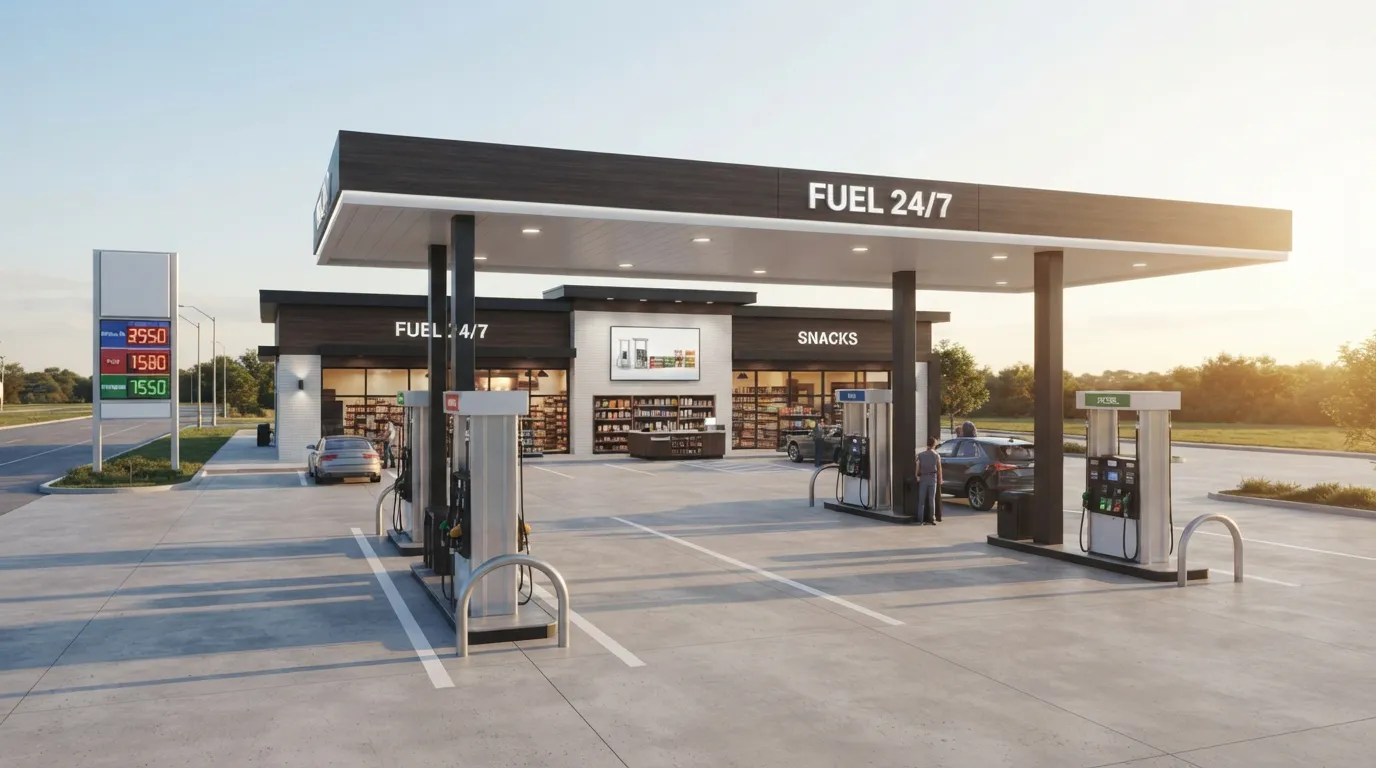
Gas stations make money by selling gasoline, convenience store products, prepared food, beverages, lottery tickets, car washes and other services. Although fuel generates much of a typical station's revenue, convenience stores often contribute a larger share of gross profit because many in-store products have higher margins. Competitive gas prices attract drivers, while food, drinks and everyday essentials create more opportunities to earn money. Stations can also explore new revenue through digital signage for gas stations, promoting their own products and potentially selling advertising space to nearby businesses.
But are gas stations actually profitable? And how much does an owner make after paying for fuel deliveries, employees, rent, insurance, utilities, card processing and maintenance? Understanding the gas station business model means looking beyond the price on the pump. This guide explains how gas stations generate revenue, how much they can earn per gallon, which products tend to offer stronger margins, and what owners can do to improve profitability.
The worked examples in this guide use hypothetical figures to show how the math works. They aren't industry averages or financial advice.
Are gas stations profitable?
Yes, gas stations can be profitable businesses, particularly when they combine consistent fuel sales with a well-managed convenience store. Profitability varies significantly with location, customer traffic, fuel purchasing agreements, operating expenses, competition and the products sold inside the store.
A station generating $500,000 in monthly revenue isn't necessarily more profitable than one generating $250,000; the difference comes down to what's left after expenses. A station might generate substantial revenue from gasoline while keeping only a fraction of it as gross profit, while a smaller operation earns meaningful gross profit from coffee, beverages, prepared food and other merchandise.
According to the 2025 Convenience Store News Industry Report, in-store merchandise and services accounted for about 60.7% of industry gross profit dollars in 2024, compared with 39.3% from motor fuels. NACS figures for 2025 tell the same story: fuel made up 65.0% of total sales dollars but only 38.8% of gross profit dollars.
That illustrates a key principle of the gas station business model: selling more gasoline doesn't automatically mean earning more money. A successful operator needs to understand both sides of the business.
What determines whether a gas station is profitable?
Location: Stations near highways, busy intersections, residential neighborhoods and commercial districts may attract more customers.
Fuel volume: Selling more gallons can increase total fuel gross profit, provided the margin stays positive.
Convenience store sales: Food, beverages and other merchandise create opportunities for additional gross profit.
Operating expenses: Labor, insurance, utilities, maintenance and rent can consume a large share of earnings.
Competition: Nearby stations influence fuel pricing and customer behavior.
Additional services: Car washes, advertising and other offerings can diversify revenue.
The most successful approach isn't maximizing fuel sales at any cost. It's finding the right balance between fuel volume, merchandise margins, customer satisfaction and expenses.
How much money do gas stations make from gasoline?
Gas stations make money from gasoline by buying fuel at a wholesale price and selling it at a higher retail price. The difference is called the retail fuel gross margin, or markup. That difference isn't the owner's final profit: the station still has to cover the costs of selling fuel, including payment processing, labor, equipment, utilities and other operating expenses.
How much profit does a gas station make per gallon?
It varies by market, time period and business model. Consider a hypothetical station:
| Item | Amount per gallon |
|---|---|
| Retail selling price | $3.50 |
| Fuel acquisition cost | $3.10 |
| Gross fuel margin | $0.40 |
| Allocated operating costs | $0.27 |
| Illustrative remaining margin | $0.13 |
In this example, the station keeps about 13 cents per gallon after allocated expenses. The figures are illustrative, not an industry average. Actual fuel margins can swing substantially as wholesale prices, competition, card fees and local operating costs change.
The U.S. Energy Information Administration explains that gasoline prices reflect crude oil costs, refining, distribution and marketing, and taxes. What customers pay at the pump therefore includes far more than the station's markup.
How much money does a gas station make selling 100,000 gallons?
Suppose a station sells 100,000 gallons a month at a gross fuel margin of 40 cents per gallon:
Monthly fuel gross profit
100,000 gallons × $0.40 = $40,000
Allocated fuel expenses: $27,000
$40,000 − $27,000 = $13,000
The station would have about $13,000 left from its fuel operation before other unallocated expenses and taxes. This shows why fuel volume matters: a small margin per gallon can produce substantial gross profit when thousands of gallons are sold every day. Operators still have to account for every expense before working out actual net income.
How much do gas stations make per month?
Monthly revenue varies widely with location, size and operating model. A small rural station serves far fewer customers than a highway travel center with many pumps, foodservice and a car wash. To see the economics, consider a hypothetical independent station.
Example monthly gas station revenue
| Revenue source | Monthly sales |
|---|---|
| Gasoline | $350,000 |
| Convenience store merchandise | $75,000 |
| Prepared food and beverages | $25,000 |
| Car wash services | $8,000 |
| Advertising and other services | $2,000 |
| Total monthly revenue | $460,000 |
At first glance, $460,000 sounds like an enormous amount of money. But revenue isn't profit: the owner still has to buy fuel and inventory, pay employees, maintain the property and cover other operating expenses.
Example monthly gross profit
Suppose the station achieves these illustrative gross margins:
| Revenue source | Gross margin | Gross profit |
|---|---|---|
| Gasoline | 11% | $38,500 |
| Merchandise | 30% | $22,500 |
| Food and beverages | 50% | $12,500 |
| Car wash | 65% | $5,200 |
| Advertising and services | 80% | $1,600 |
| Total | $80,300 |
Hypothetical assumptions, not published averages. Actual category margins and the accounting treatment of labor and other direct costs vary.
The business generates $80,300 in gross profit before remaining operating expenses. If those expenses total $62,000, the illustrative operating profit is $18,300 per month.
That still may not equal the owner's take-home income. Debt service, income taxes, capital expenditures and owner compensation have to be considered separately, depending on how the accounts are prepared. That's why two stations with similar revenue can produce very different results.
How much do gas station owners make?
Owner income depends on whether the owner runs the business personally, employs a manager, owns the real estate or manages multiple locations. An owner working full-time at a single station may draw compensation for managing it in addition to any profit distributions, while a passive investor who hires staff has to account for extra management costs.
Owner-operated versus manager-operated gas stations
Station A, owner-operated: The owner handles purchasing, scheduling, inventory and daily operations. This can remove the need for a separate manager, but the owner's labor still has economic value.
Station B, manager-operated: The owner hires a manager to oversee daily operations. This gives more flexibility, but payroll goes up.
A station that looks highly profitable because the owner works 70 hours a week may produce much lower economic returns once reasonable pay for that labor is included. When evaluating how much gas station owners make, separate three figures:
Owner salary or wages.
Business operating profit.
Cash distributions after financing and other obligations.
Combining them without explanation gives a misleading picture of actual earnings.
Why do gas stations make more gross profit inside the convenience store?
Convenience stores often contribute more gross profit because many merchandise and foodservice products have higher percentage margins than gasoline. A driver might spend $40 filling the tank, but the station keeps only the margin on that fuel. If the same customer buys coffee, a sandwich and a drink inside, those purchases may carry much higher margins.
Example: gasoline versus convenience store purchases
Imagine a customer buys $40 of gasoline at an 11% gross margin. The station earns $4.40 in gross profit. The same customer then buys $10 of food and beverages at a 45% gross margin, earning the station another $4.50.

Illustrative margins: the smaller in-store purchase earns slightly more gross profit
In this hypothetical example, the smaller convenience store purchase produces slightly more gross profit than the fuel. Exact margins vary, but the comparison shows why operators pay close attention to in-store sales.
Which convenience store products make the most money?
Potentially attractive categories include:
Fresh coffee and fountain beverages.
Prepared sandwiches and hot food.
Packaged snacks.
Bottled beverages.
Convenience merchandise.
Seasonal products.
Automotive accessories.
Not every product in these categories is highly profitable. Prepared food involves labor, spoilage, equipment and food safety costs, and merchandise profitability depends on supplier pricing, theft, inventory turnover and demand. Measure actual contribution margins rather than assuming a product is profitable because its retail price is high.
How do gas stations make money from coffee and prepared food?
Coffee and prepared food add gross profit and encourage customers to visit more often. A driver may buy fuel once or twice a week but stop for coffee every weekday, creating repeat transactions that don't depend on gasoline.
Example coffee sales calculation
100 cups a day at $2.50
Daily revenue: 100 × $2.50 = $250
Monthly revenue (30 days): $250 × 30 = $7,500
Gross profit at an illustrative 60% margin: $7,500 × 60% = $4,500
This doesn't necessarily include every labor, equipment, cleaning or overhead cost. Still, it shows how an inexpensive product becomes valuable when customers buy it frequently.
Why foodservice matters
Prepared food helps a gas station compete with nearby restaurants and coffee shops. Breakfast sandwiches, pizza, hot dogs, wraps and grab-and-go meals give customers another reason to visit. The key is matching products to the customer base: a station near offices might emphasize breakfast and lunch, a highway location quick meals for travelers, and a neighborhood station everyday food and drinks. Evaluate food costs, preparation time, labor, waste and demand before expanding the menu.
How do gas stations make money from lottery tickets?
Gas stations that are authorized lottery retailers generally earn commissions on eligible ticket sales. The rate depends on the state lottery, the game, the retailer agreement and any incentives. For example, the California Lottery lists a 6% retailer commission on Scratchers sales, subject to its regulations and retailer contract terms.
Example lottery commission
Suppose an authorized retailer sells $30,000 of qualifying tickets in a month and earns a 6% commission: $30,000 × 6% = $1,800 in commission revenue before related expenses.
Lottery tickets can also bring customers into the store, where they may buy other merchandise. But lottery sales aren't equivalent to ordinary merchandise revenue: retailers generally don't keep the full ticket price, and commission rules vary. Owners must also follow lottery licensing, age restrictions, payment procedures and retailer requirements.
How do gas stations make money from car washes?
Car washes provide another revenue stream, especially at stations with enough space and regular vehicle traffic. Customers already there for fuel appreciate washing their vehicle at the same stop. Depending on equipment and business model, stations may offer automatic washes, self-service bays or subscription packages.
Example monthly car wash revenue
25 washes a day at an average of $12
25 × $12 = $300 per day
$300 × 30 = $9,000 in monthly revenue
Gross profit at an illustrative 60% margin: $5,400
Car washes also involve substantial startup and maintenance costs. Equipment, water, electricity, chemicals, repairs, drainage and environmental requirements all affect profitability, so evaluate local demand and installation costs before investing.
How do gas stations make money from advertising?
Gas stations can potentially earn advertising revenue by selling promotional space to nearby businesses, especially locations with steady traffic and suitable placements. Interested businesses might include:
Local restaurants.
Real estate agencies.
Auto repair shops.
Insurance agencies.
Home service companies.
Neighborhood retailers.
Gas station advertising has traditionally meant posters, pump toppers and printed signs. Digital signage adds another option by rotating several advertisements on one television screen.
Example digital advertising revenue
| Advertising customers | Price per advertiser | Monthly revenue |
|---|---|---|
| 3 | $100 | $300 |
| 5 | $100 | $500 |
| 8 | $100 | $800 |
| 10 | $100 | $1,000 |
Hypothetical gross advertising revenue, not guaranteed profits. Advertiser demand, screen visibility, customer traffic, content production and sales effort determine whether the model works.
How can gas stations manage digital advertisements?
With Billiie, owners use compatible televisions to display advertisements, promotions, menus and announcements. A station might dedicate one screen to local advertisements and use others to promote coffee, food or convenience store specials. Billiie supports content uploads, playlists and start and end dates for each campaign. Your first screen is free, forever, and you can then run 10 screens for $10 a month.
Owners arrange advertising packages and collect payments directly from their advertisers, so they can explore advertising revenue without changing their core fuel and convenience store operations.
Do gas stations make money from ATMs?
Some gas stations earn income from ATM arrangements. The structure depends on who owns the machine and the agreement with the ATM provider: a station may own the ATM and receive eligible surcharge revenue, or host a third-party machine and receive a negotiated payment or revenue share.
Example ATM revenue
Suppose an ATM handles 300 surcharge-bearing transactions a month at $3 each: 300 × $3 = $900 in gross surcharge revenue. The station might not keep all $900. Processing costs, network arrangements, cash handling, maintenance and revenue-sharing terms can reduce what it receives. ATM profitability also depends on demand and local cash usage, so review the actual contract before estimating earnings.
Do gas stations make money from air pumps and vacuum machines?
Air pumps and vacuum machines can provide modest extra income. Some stations run them directly; others partner with equipment providers. Revenue depends on usage, local competition, equipment reliability and applicable rules, and certain jurisdictions require free air or water under specified circumstances, so check local requirements before charging.
For a station with limited space, these services may be easier to add than a full car wash. Evaluate them on actual demand and maintenance costs: a small revenue stream isn't profitable if repairs regularly exceed the income.
What expenses reduce gas station profits?
Gas station expenses can be substantial, and some are easy to underestimate. Fuel and merchandise inventory are major costs, but only part of the picture.
Employee wages and benefits: Cashiers, managers, cleaning staff, foodservice employees and maintenance support, plus payroll taxes, benefits, training and turnover. Operating 24 hours a day increases staffing needs.
Rent or mortgage payments: Desirable, high-traffic properties generate more sales but carry higher occupancy costs. Property ownership changes the economics, because real estate appreciation and rental value are separate from operating profit.
Credit card processing fees: Fuel customers often pay by card, and fees bite harder when fuel prices are high. Understand your payment contracts and distinguish fixed transaction fees from percentage-based fees.
Insurance: Stations face risks involving vehicles, customers, fuel storage, property damage and environmental liabilities. Premiums vary with the property and operations.
Equipment maintenance: Pumps, underground storage tanks, refrigeration and point-of-sale systems need upkeep, and unexpected failures mean costly repairs and lost sales.
Utilities: Electricity, water, heating, cooling, refrigeration and exterior lighting. Large stores with extensive refrigeration and foodservice equipment pay more.
Inventory losses: Expired food, damaged products, theft and inventory errors. Regular inventory reviews and sensible controls help spot problems.
Financing and taxes: Business loans, equipment financing, property taxes and income taxes affect cash flow. Distinguish operating profit from cash left after debt payments and capital expenditures.
Why do some gas stations lose money?
A gas station can generate significant revenue and still lose money, usually because gross profit doesn't cover operating expenses. Common causes include:
Low fuel margins: A station cutting prices to fight aggressive competition loses profit if the lower price doesn't bring enough extra volume or in-store sales.
Poor convenience store performance: Fuel customers don't automatically become store customers. A poorly stocked store, unappealing food or weak merchandising limits in-store sales.
High operating expenses: Rent, payroll, insurance and maintenance can consume gross profit, even at a location with strong sales.
Weak inventory management: Excess inventory ties up cash and invites spoilage or loss. Monitor turnover and drop products that consistently underperform.
Unfavorable fuel supply agreements: Contractual obligations can limit purchasing and pricing flexibility and materially affect profitability.
Insufficient working capital: Fuel deliveries and merchandise purchases require cash, so a business can run into cash-flow problems even when its accounts show a profit.
Are independent gas stations more profitable than franchises?
Neither independent nor branded gas stations are automatically more profitable. The better model depends on purchasing terms, customer recognition, operating requirements, location and expenses.
Independent gas stations: More control over merchandising, branding and some purchasing decisions, but less purchasing power, limited marketing support and more responsibility for building operational systems.
Branded gas stations: Brand recognition, established fuel supply relationships and access to certain promotional programs, but contractual restrictions, required investments and potentially less flexibility.
Before buying either type, review the fuel agreement, property lease, financial statements and any required improvements. The actual contract matters more than the label attached to the business.
How much does it cost to open a gas station?
Opening a gas station can require substantial capital, especially when buying land and building a new facility. Costs depend on whether you're buying an existing operation, leasing a property or developing a new station. Major expenses may include:
Property acquisition or lease deposits.
Fuel tanks and dispensing equipment.
Environmental assessments and compliance.
Convenience store construction or renovation.
Refrigeration and foodservice equipment.
Initial fuel and merchandise inventory.
Licensing, insurance and professional services.
Employee hiring and training.
Working capital.
A newly built station with multiple pumps and a large convenience store may require a multimillion-dollar investment. Buying an existing station involves a different cost structure, but buyers must evaluate equipment condition, environmental liabilities, contracts and historical profitability. The purchase price alone doesn't determine whether the investment is attractive.
How can gas station owners increase their profit margins?
Improving profitability doesn't always mean selling more gasoline. Often the biggest opportunities lie in raising what customers spend inside the store or cutting unnecessary expenses.
Increase convenience store conversion: Track how many fuel customers also buy something inside. If hundreds of drivers fill up daily but few enter the store, use clear signs and relevant offers to show what's available inside.
Promote higher-margin products: Identify products with strong contribution margins, such as coffee, prepared food and selected merchandise, and promote the ones customers are likely to buy rather than simply the most expensive.
Introduce profitable bundles: A coffee-and-breakfast combo encourages extra purchases, but calculate discounts carefully. A bundle that raises revenue while lowering total contribution profit isn't worth it.
Improve inventory management: Review slow-moving products, expired inventory and shrink, and use sales data to decide what deserves shelf space. Reducing waste improves profit without more traffic.
Evaluate operating hours: Some stations benefit from staying open 24 hours; others find late-night sales don't cover the extra labor and utilities. Analyze sales and expenses by time period before changing hours.
Review supplier agreements: Compare merchandise suppliers and understand fuel purchasing terms. Small cost differences matter across thousands of transactions.
Explore additional revenue streams: Car washes, advertising and other services can add income. Judge each on expected revenue, required investment and ongoing costs.
Improve customer retention: Returning customers buy fuel, coffee and snacks again and again. Clean facilities, consistent service and convenient payment options build loyalty.
For practical ways to bring in more drivers, see our 15 gas station marketing ideas.
How can digital signage help improve gas station profitability?
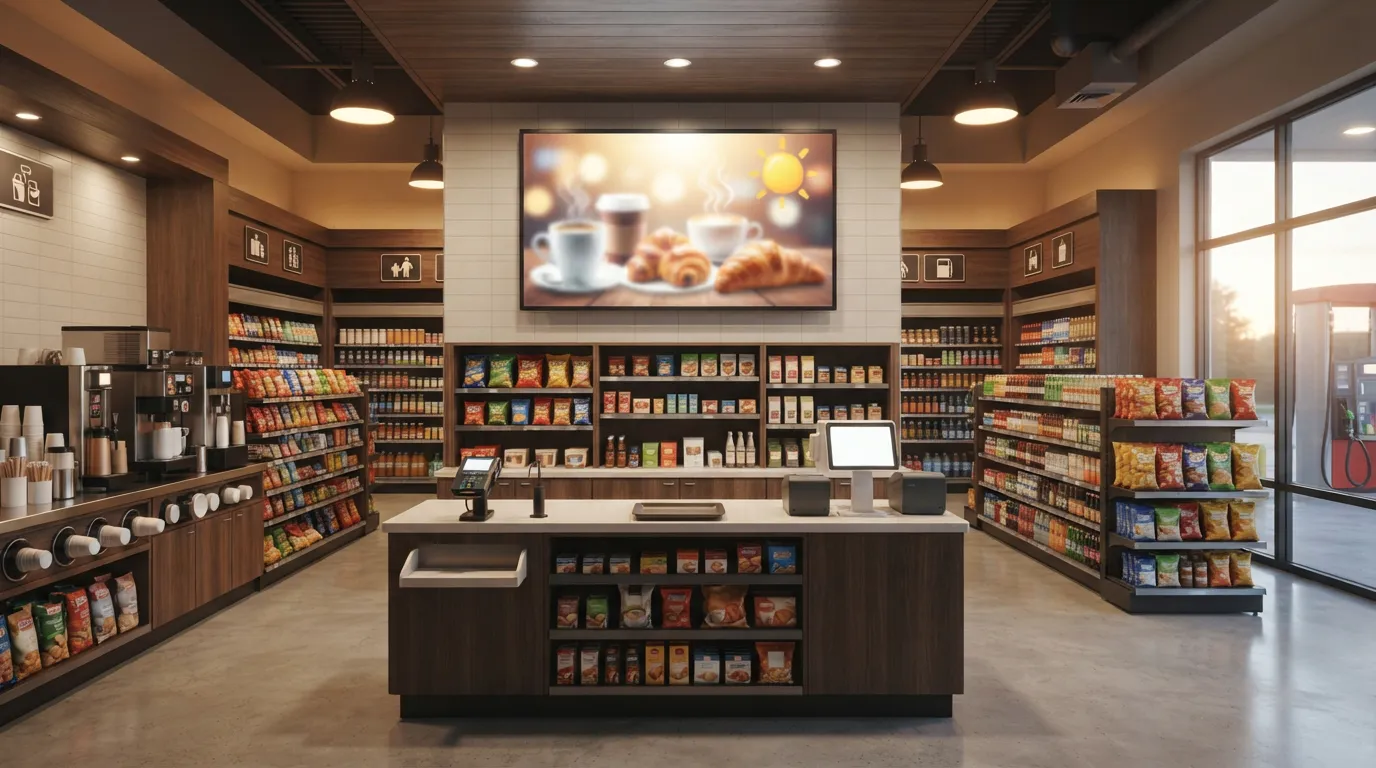
Digital signage supports profitability by making promotions more visible and easier to manage. A station may already sell coffee, prepared food and other products with attractive margins, but customers can't buy what they don't know is available. Digital displays communicate those offers throughout the customer's visit.
Example: a typical gas station customer
A driver stops for gasoline, planning to spend nothing inside. On the way past the entrance, they notice a promotion for a breakfast sandwich and coffee, decide to go in and buy the combo. The station earns a transaction that might not have happened without the promotion. (This is an illustrative scenario, not a measured result.)
What should gas stations advertise on their screens?
Breakfast and lunch specials.
Coffee and beverage promotions.
Car wash packages.
Seasonal merchandise.
Loyalty rewards.
New products.
Local business advertisements.
Store announcements.
Match the content to the screen's location and what customers there are likely to want. A screen near the coffee station might promote breakfast combos, a checkout screen could highlight snacks or loyalty offers, and a screen visible from a waiting area might rotate between store promotions and local advertisements.
Why scheduling matters
Customer demand changes through the day: morning commuters want coffee and breakfast, afternoon customers lunch, and evening shoppers drinks and snacks. Planning content for each part of the day lets owners promote relevant products without repeatedly replacing printed signs.
With Billiie, businesses upload finished images and videos, build playlists, set start and end dates for promotions and change what each screen shows remotely. Billiie manages the display of uploaded content; prices and design elements should be edited in the original design file before uploading an updated version.
How can gas stations earn additional revenue without selling more gas?
One of the most useful questions an operator can ask is whether the business can earn more from its existing property and customer traffic. Fuel pumps and convenience stores already attract people; the opportunity is to add services that complement those visits:
Selling local advertising placements.
Offering car wash packages.
Expanding prepared food and beverage sales.
Hosting an ATM under a suitable agreement.
Introducing eligible loyalty partnerships.
Improving merchandising and product placement.
Offering additional convenience services.
Not every idea suits every location. A small urban station may lack space for a car wash but have strong demand for prepared food; a highway location may benefit from traveler services; a neighborhood station may be able to sell advertising to nearby businesses. The best opportunities depend on the property, customer base and available capital.
What should you look for when buying a profitable gas station?
Buying a gas station takes more than reviewing annual revenue. Investigate how the business generates gross profit and whether those earnings are sustainable.
Review fuel sales records: Ask for historical fuel volume, purchasing costs and gross margins, and compare reported sales with supplier records and point-of-sale data.
Examine convenience store profitability: Review sales by category, inventory costs, shrink and foodservice performance, and check whether profits depend on a few products.
Understand operating expenses: Request payroll records, utility bills, insurance, property costs and maintenance history, and identify expenses that may change after the sale.
Review contracts: Fuel supply agreements, franchise arrangements, equipment leases and property leases all affect future profitability.
Investigate environmental conditions: Underground fuel storage raises important environmental and regulatory issues. Get professional inspections, environmental due diligence and legal advice before completing a purchase.
Evaluate competition: Look at nearby stations, fuel pricing, road access, traffic patterns and neighborhood development. A historically profitable station may face different conditions in future.
Analyze cash flow: Work out how much cash remains after operating expenses, required capital expenditures and financing. A station with strong revenue but weak cash flow can be hard to operate.
What is the future of gas station profitability?
The gas station business model keeps evolving. Fuel remains an important source of traffic and revenue, but operators increasingly need to think about convenience, foodservice, technology and changing vehicle preferences.
Greater emphasis on foodservice: Prepared food and beverages help stations compete beyond fuel, but they demand operational discipline, consistent quality and careful cost control.
Digital advertising and merchandising: Digital displays make promotions and advertising content more flexible. Owners can often use existing compatible televisions instead of assuming every screen must be a new commercial installation.
Changing payment behavior: Digital payments and loyalty programs shape how customers interact with stations, so operators need reliable payment systems and a clear view of processing costs.
Electric vehicle charging: Some locations may add EV charging. The economics depend on demand, equipment costs, electricity rates, incentives and how long customers stay, so treat it as a separate investment rather than assuming it pays.
More competition for convenience purchases: Stations compete with coffee shops, fast-food restaurants, supermarkets and other retailers. Convenience, quality, speed and customer experience will keep deciding who wins repeat customers.
Frequently asked questions about gas station profits
How do gas stations make money?
From fuel sales, convenience store merchandise, prepared food, beverages, car washes, lottery commissions and other services. Many locations earn a larger share of gross profit from in-store purchases than from gasoline.
Are gas stations profitable businesses?
Yes, gas stations can be profitable, but results depend on fuel volume, merchandise margins, operating costs, competition and location. High revenue doesn't automatically mean high net profit.
How much money do gas stations make per gallon?
Gas stations earn a variable gross margin on each gallon. That margin has to cover payment processing, labor, equipment and other expenses before it becomes profit, so there's no single fixed net profit per gallon.
How much do gas station owners make per month?
Owner earnings vary widely. Revenue, operating profit, owner salary, debt payments and cash distributions are different figures, and reliable estimates require the specific business's financial statements.
Do gas stations make money on gas?
Yes. Gasoline can generate substantial gross profit through high volume, although its percentage margin is generally much lower than that of many in-store products.
How much profit does a gas station make a month?
Monthly profit is fuel and merchandise gross profit minus operating expenses. A station can generate hundreds of thousands of dollars in revenue while keeping only a relatively small portion as operating profit.
How much money do gas stations make off gas?
It depends on gallons sold and the retail fuel margin. For example, 100,000 gallons at a 40-cent gross margin produces $40,000 in fuel gross profit before operating expenses.
How do gas stations make money on lottery tickets?
Authorized retailers generally receive commissions on eligible ticket sales. Rates and incentives depend on the state lottery and the retailer agreement.
Are convenience stores more profitable than gas pumps?
Convenience stores often contribute a larger share of total gross profit dollars, even when gasoline generates more revenue. Profitability after operating expenses varies by location and business model.
Can a gas station make money from digital advertising?
Yes, a gas station may be able to sell advertising space to nearby businesses. Revenue depends on advertiser demand, traffic, pricing and how visible the displays are.
Is owning a gas station a good investment?
It can be, when the purchase price, operating profit, cash flow, property condition and contractual obligations support the expected return. Buyers should carefully evaluate environmental liabilities and future capital requirements.
Final thoughts: where do gas stations really make their money?
Gas stations make money through a combination of high-volume fuel sales, convenience store purchases, prepared food and additional services. Gasoline remains central because it attracts drivers and produces significant volume, but convenience store merchandise and foodservice often contribute a larger share of gross profit, making in-store performance a vital part of the business model.
For owners, the goal is to understand the profitability of each revenue stream rather than focusing only on gasoline prices. That means measuring fuel margins, managing inventory, controlling expenses, promoting profitable products and adding services where they make sense. One opportunity is making better use of the televisions and customer-facing displays already on the property.
Screen placement matters. A well-positioned display helps customers notice promotions, while a poorly placed one gets little attention. For practical guidance, read our guide on where to place digital signage.
Billiie helps gas station owners display promotions, menus, announcements and local advertisements on compatible televisions, manage content remotely and run screens across one or several locations. Learn more about Billiie digital signage for gas stations.


Ready to bring Billiie to your business?
Manage your screens, content, and locations from one simple dashboard.
No commercial signage hardware neededPowered by Billiie